Blog
Men’s Messenger Bag or Sling Bag for Everyday Carry


A messenger can look right for the commute until you realize most of your day involves standing, turning and pulling a phone out with one hand. A small sling can seem ideal for those movements until you try to carry an e-reader with a protective case or a lunch container that refuses to rotate through the opening. The better choice depends on the objects you carry and how you reach them along a real route.
Put your everyday essentials on a table first. Then open the Integrity Bags men's bag collection and compare the shape, access and strap of the exact models. A style name will get you to the right group of candidates. The tests below help you choose the one you will actually reach for.
Pack a normal day before you look at a listing
Lay out everything you would carry on an ordinary weekday. Include the bulky versions you actually use, such as a phone in its case, a folded umbrella in its cover, or a charger with the cable wrapped around it. Separate the items into three groups. Use one group for things you take out repeatedly, one for things you take out once or twice, and one for things you carry only occasionally.
For example, a commuter might use a transit card and phone at every connection, retrieve a notebook and charger at a desk, and carry an umbrella only in certain weather. If the umbrella decides the size of every bag they own, it can make most days unnecessarily cumbersome. If a water bottle goes everywhere, count its diameter and orientation as part of the core bag requirement.
Measure the widest or stiffest object after it has gone into its protective sleeve. That object sets a minimum opening and a usable interior shape. A notebook with a rigid cover can make a bigger difference than several soft items. A slim e-reader with a broad case is an especially good test because it appears compact and still needs a nearly flat path through the opening.
Give each category of item a likely place in the bag before you browse. Your phone might need an easy outer pocket or a particular position in the main compartment. Keys might need a pocket where they cannot catch the charging cable. Your notes do not need to be elaborate. They should describe what you will actually do when the bag is full.
Compare rectangular and tapered space with the same objects
Messenger bags commonly offer a body whose broad face can suit flat contents. Slings often use a narrower or more tapered body that sits closer to the torso. Neither style name tells you how much of the outline remains usable once there are dividers, a shaped bottom or a curved zip. Study the exact page and look at the openings as well as the bag's silhouette.
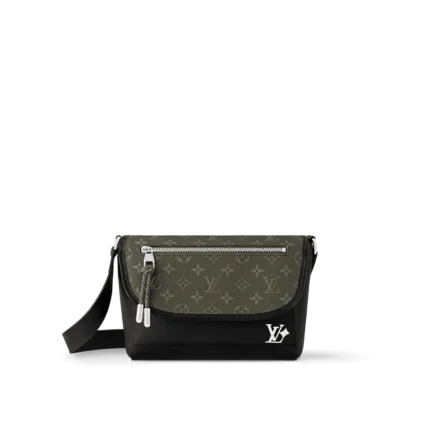
Start with the Messenger MM Voyager and the Duo Slingbag. The Voyager listing describes an inside zip pocket. The Duo listing describes an exterior zip pocket. The location of those features is useful for planning access. Use the images and description of each item to see which objects you would place there.
Make a paper rectangle the size of your largest rigid item. If the gallery offers a top or inside view, visualize bringing that paper through the real opening in the direction you would use. A long opening can still be constrained if its ends curve sharply or its flap restricts how far the top opens. A large front view can hide a narrow side profile or a padded wall.
Picture two carry sets. One contains a phone, earbuds, keys, a slim wallet and sunglasses. The other adds a rectangular notebook, a packed lunch and a small umbrella. The first set lets you give priority to a slim shape and quick access. The second needs deliberate interior geometry. Consider how the bottom will support the loaded bag so your flat items can come out without catching on the bulkier ones.
Rehearse reaching for one item while standing
Put the bag you currently use over the shoulder you prefer. Stand as you would at a station gate, with one hand occupied. Reach for the item you use most often. Notice whether you have to move the bag forward, open the main closure, reach past another item, then close the bag with both hands. Those steps reveal more about daily convenience than a photo of several empty pockets.
Compare the listing's closure to that movement. A flap and a zipper give different ways to open and close a bag. A large flap can expose a broad area when lifted. A zipper may give a smaller access path and require you to hold its opposite end if the bag shifts. Some bags have a flap over a second closure. The number of motions is worth checking if you take out the same object many times.
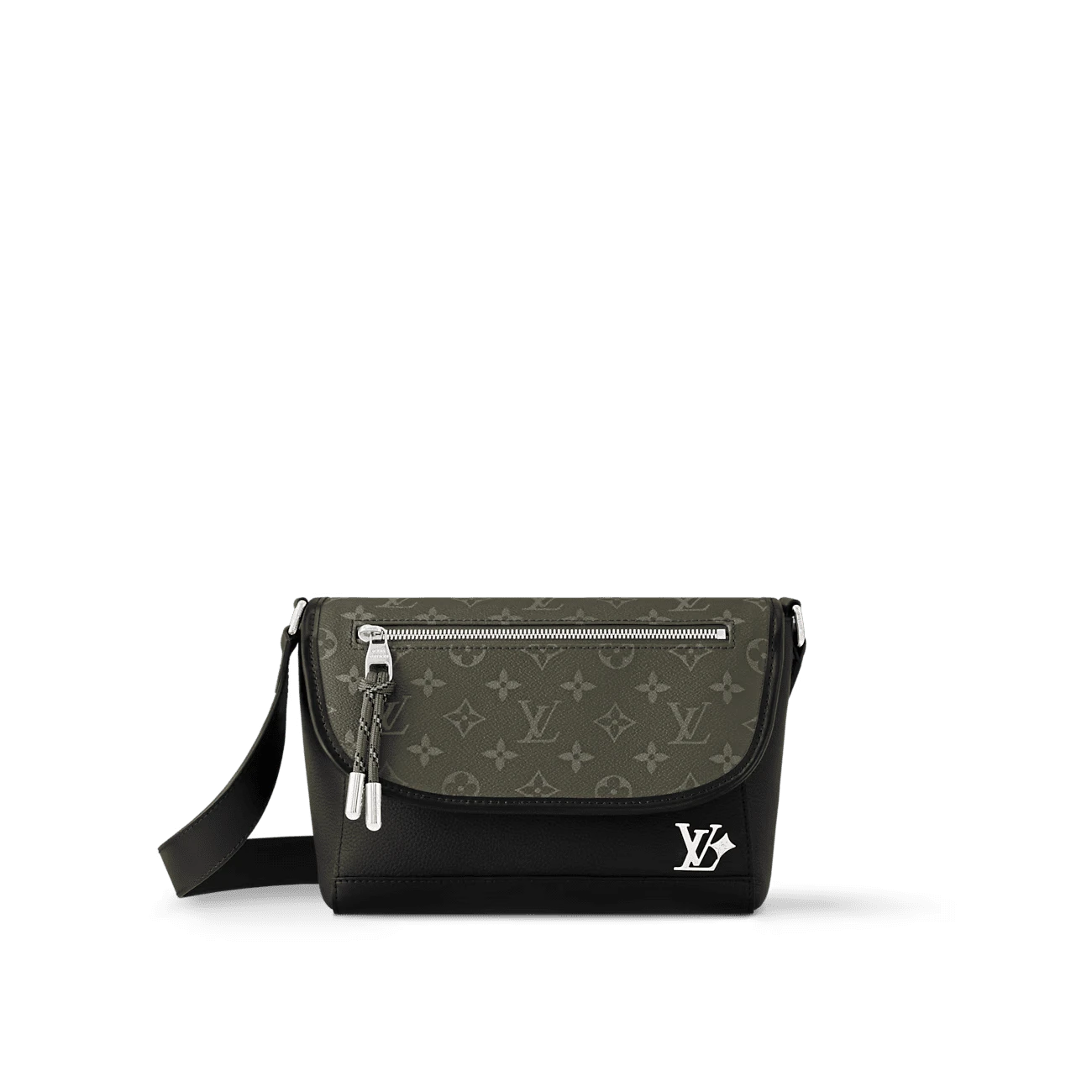
The Pulse Messenger listing describes a magnetic closure and an exterior zip pocket. Think about the difference between putting your phone in that exterior location and reaching inside for it. With the Avenue Slingbag PM listing, the description identifies an inside pocket. Open the gallery to see how you would approach it when the bag is on your body.
Observe how the bag hangs while open. If you often stand at a counter and pull out a wallet, you may appreciate an opening that remains reasonably easy to reach when the bag rotates forward. A pocket may be easy to use on a desk and awkward while standing if it ends up behind the strap attachment. Treat the angle of access as its own decision.
Test the strap range against your body and clothing
Measure a crossbody strap that already sits at the right height. Record the setting and whether you measured the exposed strap alone or included hardware. Then repeat over the thickest coat you expect to wear with the new bag. The strap required to keep a bag in the same place may change with clothing, and a comparison is much easier when both measurements use the same endpoints.
Check whether the bag is intended to ride across the back, against the chest or near the hip in your preferred use. For a sling, inspect both attachment points and any information about which shoulder the strap can use. For a messenger, consider how far the body extends past the hip and whether the bottom meets your leg while walking. The width of the bag and the angle of the strap affect this together.
The Messenger Voyager PM listing describes an adjustable shoulder strap. Confirm the actual working range and attachment arrangement for that listing if your preferred position is close to the limit. An adjustable strap has value when its available settings include where you need the bag to ride.
Try sitting in a chair with your existing bag while wearing a jacket. If the new bag will be worn on public transport, decide whether you normally remove it, pull it forward or leave it against your side. A long bag can occupy more seat space. A compact sling can feel obtrusive against the ribs if it sits too high. The test gives you a height and profile to compare against new candidates.
Make a realistic load and compare movement
Use an existing bag or a simple box of similar proportions. Put in your measured items and carry it for a few minutes around a room. The effect of a rigid notebook, a filled bottle and a dense charger can become obvious when you walk, even if the bag looked manageable while empty. Watch whether the load swings away, stays close or pushes one corner into your side.
For a messenger, pay attention to the way the broad face rests against the body. A flat notebook may sit neatly close to you. A thick item near the outside can pull the loaded weight farther away. Move the dense item toward the side against your body and see whether the bag becomes more stable. That shows you why pocket location can matter as much as the total interior volume.
For a sling, check whether the contents stack well in a vertical or diagonal position. If your bottle is likely to end up across the zipper path, the bag may be large enough to close and still awkward to use. Set aside one item you truly carry only occasionally and repeat the test. Your usual load may point to a clear choice when you distinguish it from your exceptional load.
If you regularly carry a layer or a packed lunch, measure the thickest version. A light sweater compresses. A firm container keeps its shape. Both may occupy roughly the same volume on a table and have different effects on a tapered opening. Use real objects for the test whenever possible, so you can feel what happens at the corners instead of judging only by the overall bag dimensions.
Plan pocket assignments to avoid interruptions
Assign each fast-access item a place before you choose a bag. A commuter might put a transit card in a small outer pocket and a phone in a separate sleeve. The choice should reflect how you retrieve the object, where the bag normally sits, and whether one item could pull another out with it. A spare pocket is helpful if it supports a step you will take repeatedly.
A shallow zip pocket can be easy for slim items and unsuitable for glasses in a rigid case. An inside zip pocket may be better for a small item you want to keep separate, but it can add time to every retrieval if you use it for something you reach for constantly. Ask for the usable opening rather than relying on the pocket's apparent height in a photograph.
Walk through three parts of a typical day. At the first stop, retrieve only the thing you need immediately. At the second, remove your largest rigid item without unloading the bag. At the third, put everything back when the bag is already full. If a design forces several items out whenever you reach for one, it may suit a different carry set even if it meets the dimensions.
Take a second look at the messenger bag collection after making these assignments. It is easier to distinguish a helpful inside pocket from a feature you rarely need. If a product photo leaves you uncertain about the size of a pocket or the direction of a zip, ask a specific question with the item and the object you want to fit. Integrity Bags contact
Compare three realistic shopping scenarios
For a walk-heavy city day, imagine carrying a phone, wallet, earbuds, keys and one extra layer. Try packing the layer in your example load and leave the phone in a dedicated spot. If a compact sling holds everything and lets you bring it forward without rearranging the contents, that is a useful advantage. Check how the strap sits over your planned jacket and where the bag rests when seated.
For a commute with a notebook and a charger, begin with the notebook's outside dimensions and the room needed to slide it past the closure. Give the charger a place that keeps it from pushing on a rigid cover. A messenger may give you a useful rectangular arrangement. Confirm the opening and depth first, especially if the body tapers at the top or if the notebook has an unusually wide cover.
For a trip where you carry a small camera, the deciding measurement may be depth. The camera may enter easily, then leave little room for the phone and glasses. Place it in the mock-up first and draw the most natural route to retrieve it. Check whether you can lift it without tilting a bottle or opening the bag far enough to spill another item. The name of the bag matters less than the usable space around that shape.
A reader who shifts between these days can choose the most frequent scenario and see whether a second item can fit when needed. A single bag that suits four days out of five may be a sound choice, even when it cannot comfortably carry the occasional extra object. Keeping this frequency in mind makes the trade-off explicit.
One extra test helps when your route involves a bicycle or a long walk. Put the dense items you normally carry close to the torso in a bag you already use. Walk a flight of stairs at a comfortable pace and note whether the strap migrates toward the neck or whether the bag drifts forward each time you stop. The test is a reference for your own movement, clothing and preferred shoulder. Look for a strap range and attachment arrangement that would let the candidate sit in a similarly stable position. Keep the test about ordinary movement and assess any sport-specific requirements separately.
Use the exact listing to make the final decision
Record the overall width, height and depth if provided. Add any known usable opening, your longest or thickest item, the location of its pocket if applicable, and the strap height you prefer. Leave the difference between exterior and interior clear in your notes. The final check is whether the packed bag lets you do the things you listed at the start.
Take a last look at the image of the exact item and option. Match its closure and strap attachments to the description. If you want the shorter side of an adjustable range, confirm where the bag would sit on the body you measured. If an interior measurement is missing and critical, ask about it before counting the bag as a fit.
A messenger can be a comfortable daily choice when its shape carries the flat objects you need and its opening makes them easy to reach. A sling can be especially useful when the contents are compact and you want to move the bag close to your body. Your actual load, your preferred access and your strap measurement will tell you which one fits your day.
Compare these products