Blog
How to Measure Watch Strap and Bracelet Fit Before You Buy

A watch can fit across the top of your wrist and still feel awkward. A buckle can sit too far toward the side, a clasp can rest on the edge of a desk, or a strap can reach its final hole without securing the case where you prefer to wear it. Those problems are about the loop around the wrist and the way it distributes length. Before shopping, collect information about the whole watch in its fastened position.
You can do most of this with a strip of paper, a ruler and a watch that fits you. The method below separates measurements of your wrist, the strap pieces and the assembled watch. Keeping those numbers separate makes store listings and size options easier to compare.
Find the circumference at your actual wearing position
Move your reference watch to the position you use most during the day. The familiar position may be just above the wrist bone, farther up the forearm or near the base of the hand. Lay a narrow flexible strip around that exact spot. Bring the strip around without pulling enough to indent the skin, then mark the overlap. Lay it flat and measure from the beginning to the mark.
Repeat with the wrist relaxed and your arm in the position you use most. If you spend much of the day at a desk, take one reading with your hand resting near the keyboard. If you wear a watch over a thin sleeve, measure over that sleeve separately. The watch you use without a sleeve may need a different setting when worn over fabric.
Record the measurement in the unit used by the listing, usually millimeters or centimeters. Write the placement next to it. An entry such as “around 165 millimeters just above the wrist bone” is more useful than a number alone. If you also measure the other wrist, label left and right. The same clasp setting can feel different on each side.
Avoid adding an arbitrary allowance to every circumference. A comfortable setting depends on the watch case, the type of strap and how you prefer to wear it. A loose bracelet can feel pleasant when walking and slide farther than you want while typing. A strap adjusted to keep the face in position can feel restrictive when your wrist bends. Observe the setting you already use before deciding how much freedom matters to you.
Measure a watch you actually wear
Take off the reference watch without changing its setting. Close the buckle or clasp as you normally wear it. An inside measurement around that closed loop offers a practical comparison, particularly if the listing gives an inside circumference. If it is difficult to measure directly, photograph the watch closed and note the exact strap hole or clasp position. A photo of the underside can be as informative as the number.
With a strap that uses holes, measure from the attachment point on the case to the active hole on the long side. On the short side, note where the buckle engages the hole. Write down the two measurements independently and keep a photo of the attachment method. The working length includes the two sides, the gap bridged by the case, and the way the buckle joins them. A strap shown as two piece lengths is describing components rather than the resulting internal circumference.
With a bracelet, make a note of the current link arrangement and where the clasp lands underneath. Look for a spare link if the original owner supplied one. If the bracelet is already on the shortest or longest setting you use, that observation tells you what you would want from the next watch. A photograph of an open bracelet does not tell you how many removable links accompany the actual item.
Finally, record why the reference works. You may like that the clasp sits clear of the desk edge, that the case stays centered, or that one additional hole lets you loosen it over a cuff. A feature that sounds minor on a spec sheet can determine which of two otherwise similar watches you reach for.
Separate strap length from lug width and taper
The width at the case is often called lug width, or the distance between the points where a conventional strap attaches. It answers a compatibility question. It does not tell you whether the strap is long enough. Where a strap narrows toward the buckle, the width at the buckle may differ from the width at the case. Both figures may matter if you plan to reuse an existing buckle.
Look at whether the strap fits between traditional lugs, mounts to a custom end piece, or continues into an integrated case design. With a custom connection, a plain strap of the same nominal width may still have the wrong attachment shape. A listing that shows the front of a watch cannot establish compatibility at the underside of the case.
Some brands describe the two strap pieces with two lengths. Others give a minimum and maximum wrist measurement for the watch as supplied. These labels answer different questions. If you compare component dimensions with a closed circumference, your calculation may count the buckle or case twice. Ask how the seller measures when the endpoints are unclear.
Take an overhead photo of your reference with the strap laid flat and another photo with it closed. Mark the side that contains the buckle and the hole you use. When checking a replacement, send the exact reference and ask about the long piece, the short piece and the case connection separately. Keeping the pictures alongside the notes prevents “short strap” from meaning a smaller overall loop in one conversation and a shorter buckle side in another.
Check what kind of adjustment is actually available
A pin buckle typically gives a series of discrete holes. A sliding clasp can move along some designs, while a metal bracelet may need full links removed or installed. Some clasps provide additional incremental settings and others do not. A product photo may show the clasp type, but ask what adjustments are present on the exact item before assuming a fine setting is available.
A full link can change the fit by more than the amount you need. Suppose the bracelet feels too loose with all links in place and too tight after one link is removed. A smaller incremental adjustment could make the difference, if that clasp supports one. You may also need a different link distribution on either side so the clasp closes under the wrist. The existence of two adjustment methods does not mean every bracelet offers both.
Inspect the buckle position on a strap that uses holes. If you would use the tightest hole of a standard strap, the long tail may still travel far around the wrist. A shorter set of strap pieces can change the tail position and bring the buckle closer to center. If your reference already closes near the loosest hole, asking only for extra holes might leave too little strap secured under the keeper.
Adjustment should follow the instructions for the exact model or be handled by someone equipped for its fasteners. Official manufacturers describe different adjustment mechanisms and distinguish simple systems from cases that require service. Those instructions illustrate why a generic video for a different link system is a poor substitute. Citizen's overview of strap and bracelet adjustment
Read the watch and bracelet as one shape
A clasp can be centered around the underside even when the case sits slightly off center on the top. Turn your reference watch toward you as you normally would to read the dial. Notice how the watch moves when you lower your wrist again. A larger case can create leverage on a loose bracelet, while a stiff strap can hold a particular angle until it begins to bend away from the case.
Examine the first bracelet links in the pictures. A link that projects straight out before it bends changes the effective span across the top. If the bracelet begins curving very near the case, it may follow a round wrist more readily. Measure the effective span separately from the loop size. Otherwise, you may buy enough bracelet length for a watch that still reaches farther across the top than you prefer.
Place your wrist on the desk with the reference watch in its usual position. Does the clasp touch the surface first? Does a keeper or buckle catch on your sleeve? When you lift your hand, does the case settle back into the same spot or rotate? The answers help you evaluate the clasp profile and the distribution of the strap lengths, which are difficult to judge from a dial photo.
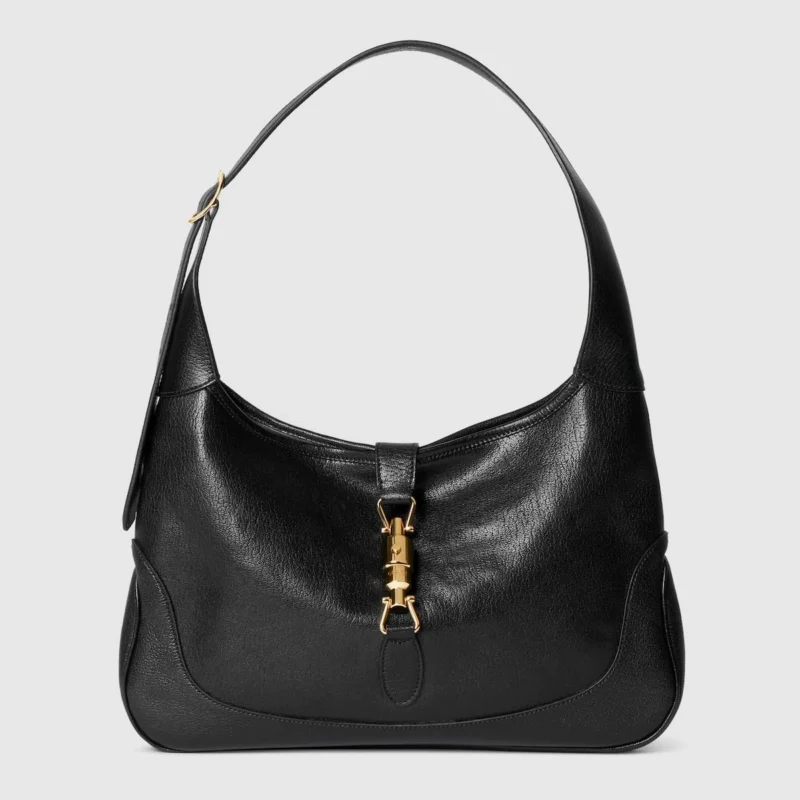
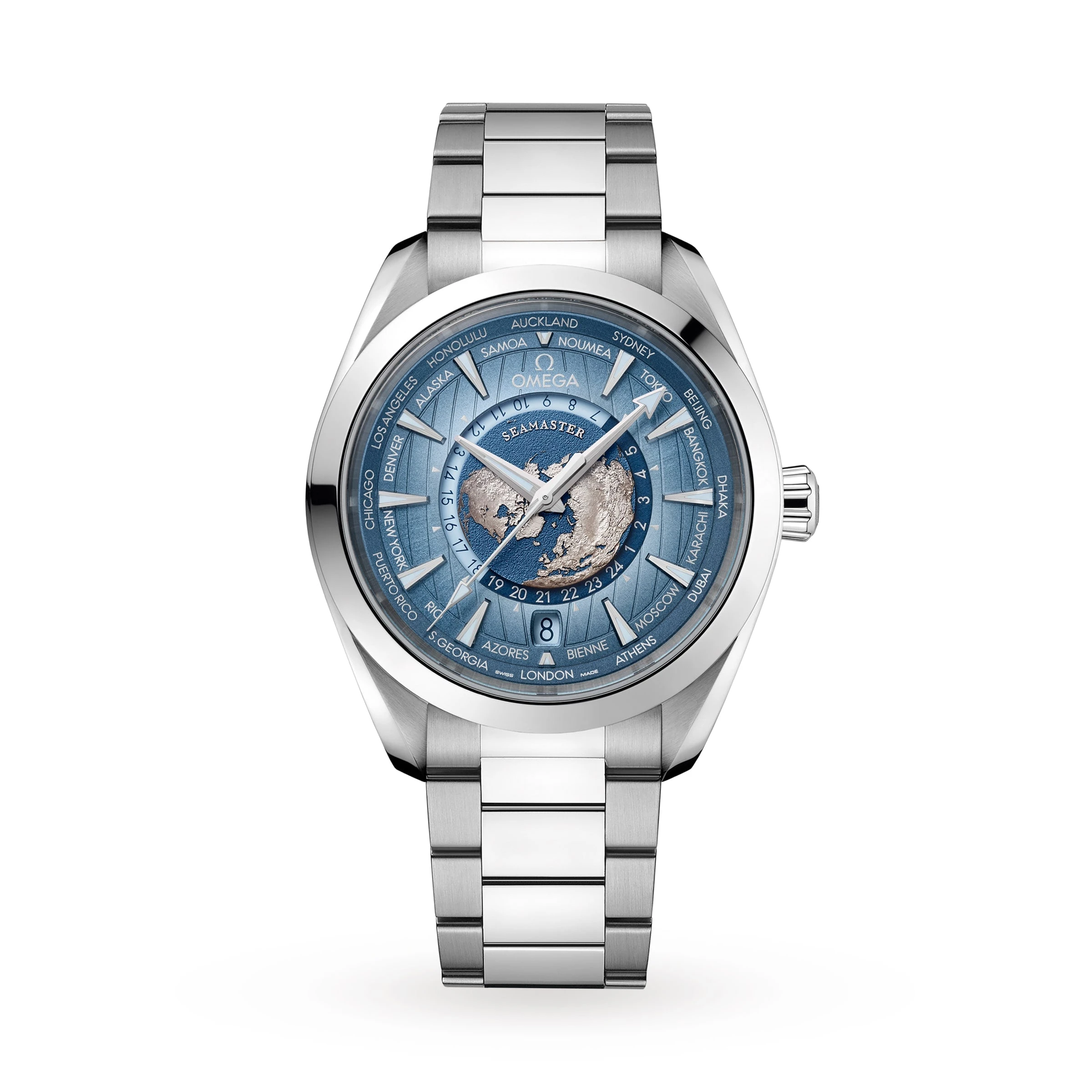
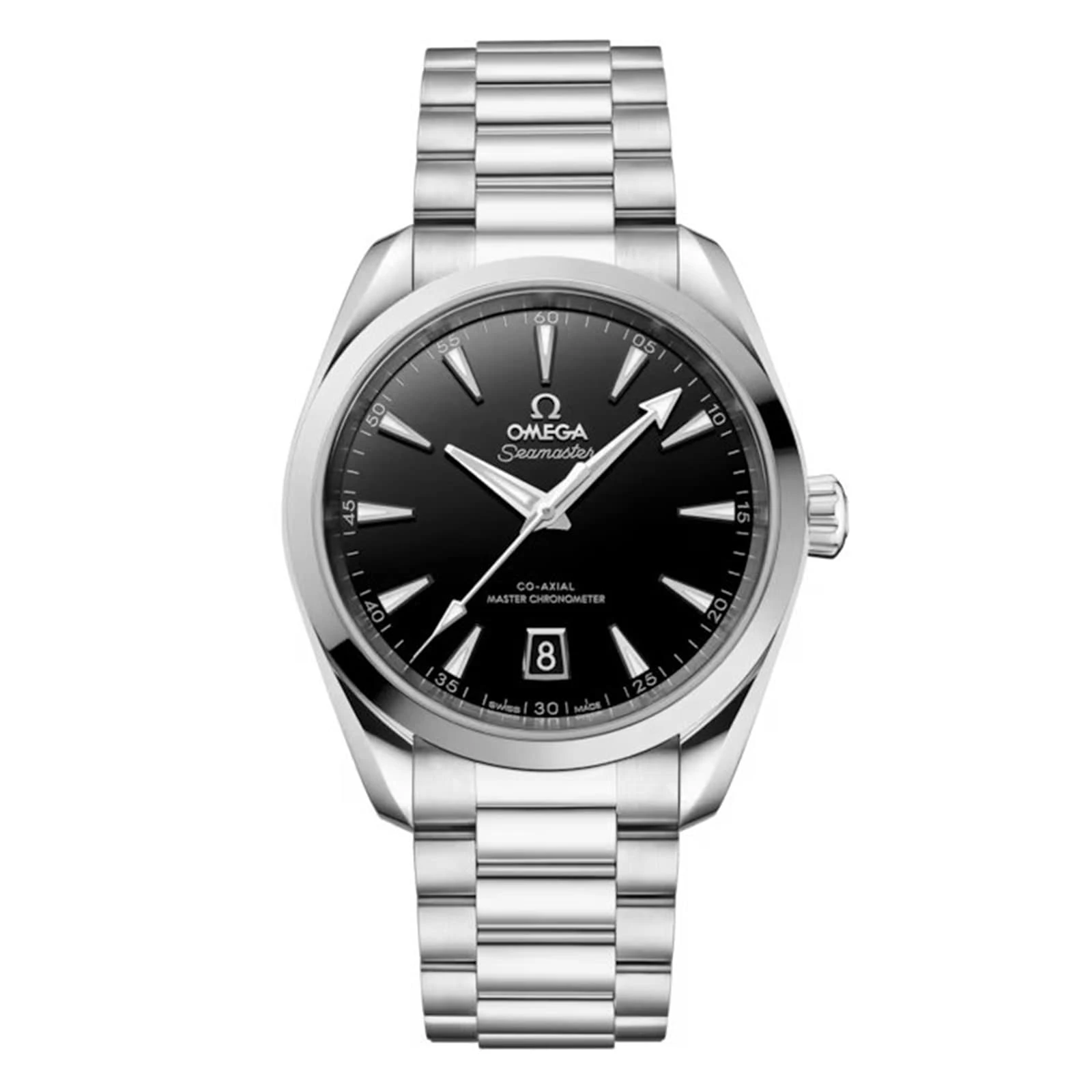
To practice with live listings, compare the available photographs for the Aqua Terra listing ending in 75 and the Panthère listing. Look for the relationship between the case and the first section of strap or bracelet in the photos. The examples are a way to learn what to look for. They do not establish that either watch offers an adjustment option that the current listing does not specify.
Resolve small and large wrist fit before ordering
A smaller wrist may need more than a minimum circumference that looks plausible. Check whether enough links can be removed, whether the clasp stays centered and whether a long buckle tail remains secure in its keeper. If the bracelet has long fixed end pieces, get that length too. Even a short adjusted bracelet can sit awkwardly if those fixed parts span most of the usable top of the wrist.
A larger wrist needs the usable length with the included components. Ask whether additional links shown in a gallery are included with the option being ordered. With a strap, ask where the last usable hole falls and whether the keeper can hold the remaining tail at that setting. A strap that closes at its limit may offer little flexibility between wearing locations.
If buying for someone else, use a reference watch they wear regularly if you can measure it with permission. Write down the active hole or the closed bracelet circumference and note the style of clasp. It helps to know whether they like the watch to move slightly or stay close to the wrist. The diameter of their favorite watch does not reveal that preference.
When you cannot obtain a reliable measurement, a watch with a clearly documented adjustment range makes comparison easier. Contact the store with the exact listing and ask for the minimum and maximum circumference with the supplied components. If you expect to change the strap later, ask separately about the case attachment. Integrity Bags customer support
Make a one-page comparison for your shortlist
Set up a column for the watch you wear now and another for each candidate. Record these details before deciding.
- Your wrist circumference and the point where you measured it
- The closed inside measurement of your reference watch, if available
- For straps, the two piece lengths, usable hole range and buckle position
- For bracelets, the supplied length, removable links and documented clasp adjustments
- The position of the first flexible section beside the case
- The exact product link and option you intend to order
Compare results while imagining a full day of wear. A small difference in overall circumference may matter more on a watch that you need to remain centered under a cuff. For another shopper, the useful difference may be a low clasp that stays clear of the desk. A good record makes these preferences visible and distinguishes them from the parts you still need to confirm.
Check the range against a real day
Imagine starting with a shirt cuff in the morning and changing to a short sleeve later. Fasten your reference watch at the setting you use first and note how much the fit changes when you move it farther up the arm. Do the exercise again after a walk or an afternoon at a warm desk. You may discover that your preferred fit is a range of positions rather than one exact measurement. Keep both positions in your notes and use them when you ask about usable adjustment.
Next, identify which part of the watch touches a hard surface first when you rest your hand. On a strap that may be the buckle edge. On a bracelet it may be the folding clasp. If that contact already annoys you, look for a view of the clasp from the side and ask about how far it projects from the inside of the loop. Overall circumference alone misses that detail.
If you switch between a watch and a fitness band on the same wrist, take your measurement with the watch position in mind. The band may sit higher because you tightened it for exercise, and its flexible loop can follow the wrist more closely than a watch with rigid first links. Draw a simple mark on your comparison sheet for where the two pieces sit relative to the wrist bone. If you intend to wear them together, measure both positions separately and check whether their edges touch when your hand bends. Use the dimension from the position you actually want for the watch.
Browse the watch collection with that record beside you. If an attractive candidate leaves the fit range uncertain, keep it on the list while asking for the measurement that would resolve the uncertainty. If the listing gives an adjustment range, check whether your preferred fit falls comfortably within it. The aim is a watch that closes securely and holds the position you want through your usual movements.
Compare these products