Blog
Alma BB or Alma PM? A practical guide to choosing the right dome bag

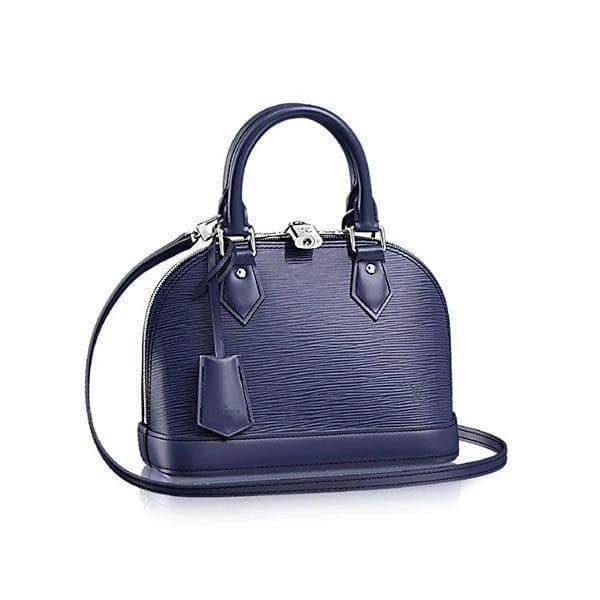
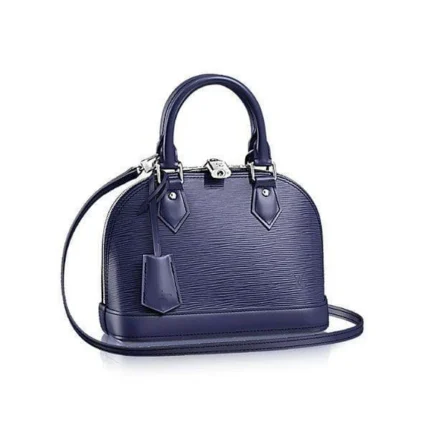
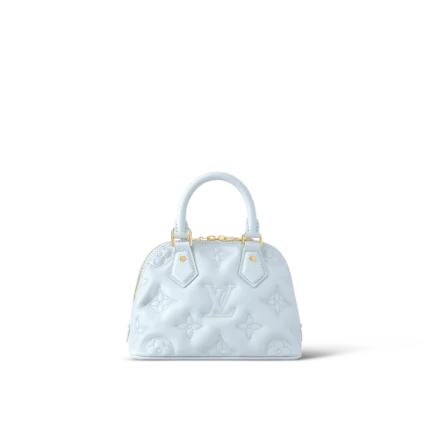
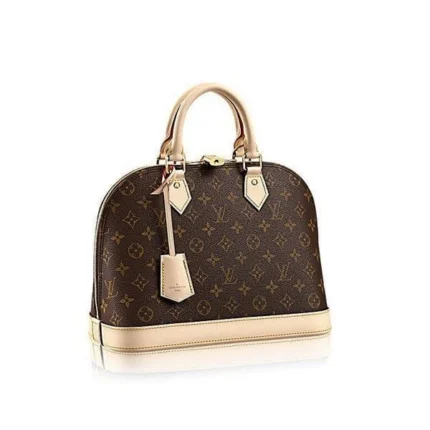
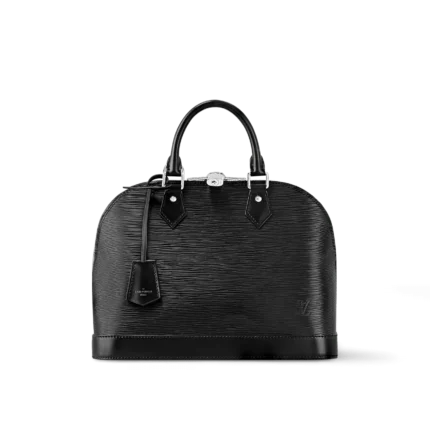
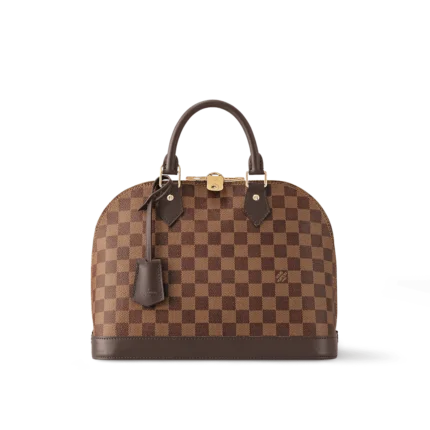
The shape of the Alma makes this size decision more interesting than it looks. The flat base sets a clear footprint, the body curves into a dome, and the two handles bring the top into focus. The Alma BB and Alma PM share that visual idea. They give your belongings different room to move, and they ask your hands to do different things while you carry or open them.
If you are between sizes, begin with the change you want to make to your daily routine. Perhaps you want a handbag that fits easily on a restaurant chair and still gives you a proper place for glasses. Perhaps you want a daytime bag that takes a small notebook, a pouch and a pair of sunglasses without making them compete. The useful choice is the one whose shape gives those items enough room where they will actually sit.
Compare the product codes before you compare sizes
| IntegrityBags listing | Published dimensions | What to investigate |
|---|---|---|
| Alma BB M40855 | 25 × 19 × 11 cm | Confirm space for the longer item you use every day |
| Alma BB M59822 | 24.5 × 18 × 12 cm | Decide whether the extra listed depth helps your arrangement |
| Alma PM M53151 | 32 × 24 × 15 cm | Inspect the double zip, internal pockets and base details |
| Alma PM M40302 | 32 × 24 × 16 cm | Consider the listed hand and elbow carry with a coat |
| Alma PM N53151 | 32 × 25 × 16 cm | Check the proportions in the exact gallery |
The BB examples differ by small amounts in every direction. The PM examples share a published 32 cm first dimension and differ in height or depth. These are exterior figures. Rounded corners, seams, zipper movement and how an item enters the bag all reduce the certainty you can get from dimensions alone. Since the models have individual listings, read the exact variant and check the description for the hardware and carry pieces you plan to use.
Map the dome around the one item you cannot compress
The broad part of a dome bag is lower in the silhouette. Look at a front image and draw an imaginary horizontal line at the height where your glasses case or wallet would sit. Now move the line halfway up the front. There is less left-to-right room near the top on a curved outline, so a long rectangle may fit low and be awkward when you try to stand it upright. That is an important difference from a boxier bag with straighter sides.
Do a paper test at home. Draw the published width and height as a rectangle, using paper or removable tape. With the product gallery on your screen, sketch a conservative curve inside the upper part. Try moving a cardboard outline of your longest object into it. The drawing is a planning aid and you can redraw it freely. Its value is in revealing the directions your belongings can use. If they fit only when the curved area is completely filled, put the model aside until you can confirm the usable room.
Make a second outline for the published base, and put your two deepest objects side by side inside it. Use the object measurements including cases, caps or an attached ring. If the objects need every millimeter of the published footprint, they will be a squeeze in practice. Leave extra room for handling and for the shape at the ends. A bag that closes with objects inside can still be tiring to use if one piece has to come out every time you reach for another.
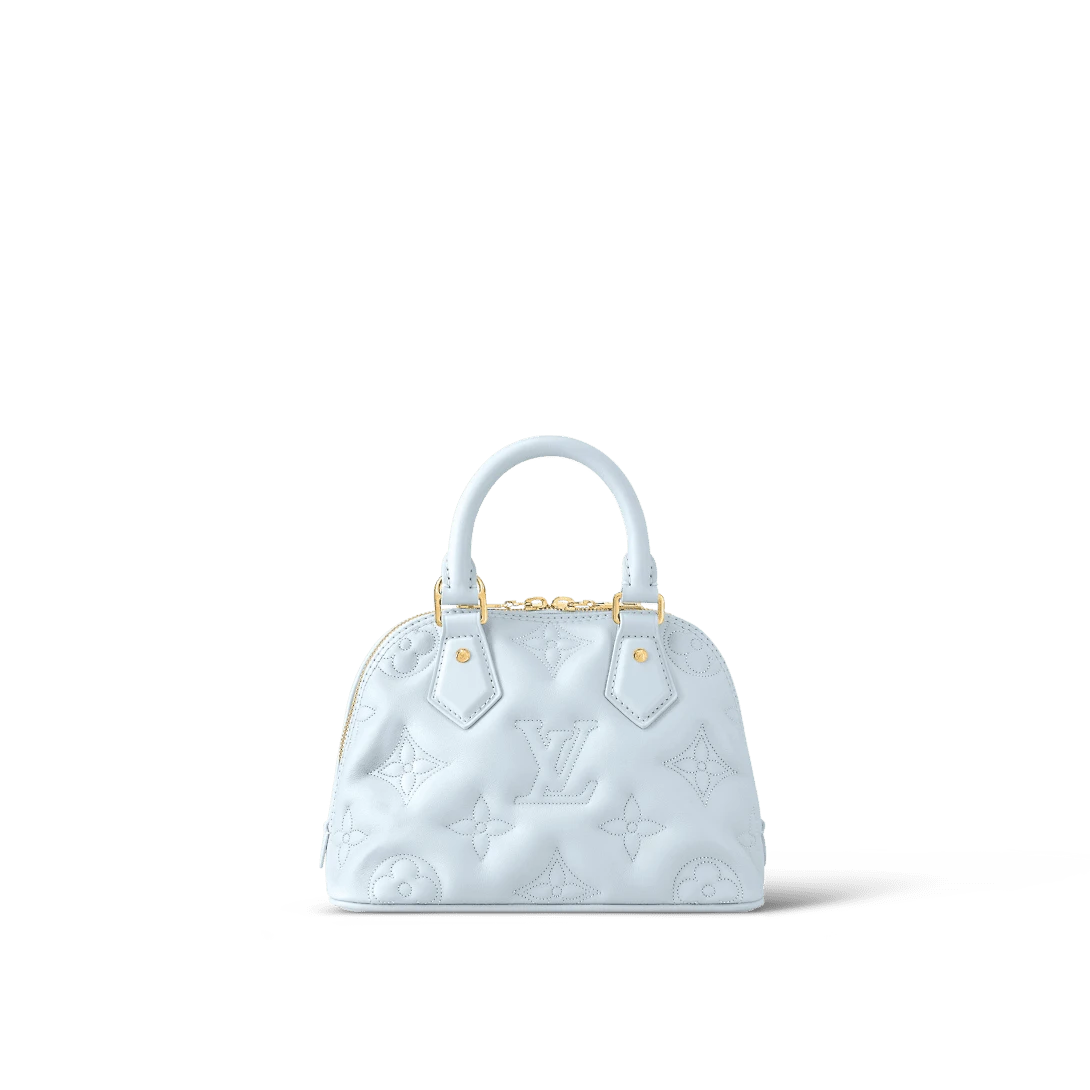
Decide what the BB needs to carry on its busiest ordinary day
The BB makes sense for a day built around a small number of hard-working items. Imagine the bag accompanying you from lunch to an appointment, with your phone, keys, card holder, a slim glasses case and a compact pouch. Your route asks for a phone in the first five minutes and a card near the end. Put the frequently handled items within easy reach and give the glasses case its own route through the opening. A neat small bag often works because its contents form a shallow arrangement rather than a tall pile.
With the M40855 BB, start your fit check from the listed 25 cm figure. With the M59822 BB, consider the listed 12 cm depth along with the slightly shorter and lower figures. If you rely on a case that lies across the bag, opening length is likely the question. If you carry two shorter objects with more thickness, the base and the position of the pieces above them may matter more. Differences within the BB name are meaningful only when you can identify an object that uses that space.
There is a good way to catch a common mistake. Pack the items you expect to carry, then change the phone from its storage position to the place you put it when you are in a hurry. Does it lie across the opening? Does it push the glasses case into a corner? If a tidy arrangement works once but the natural return position makes closing difficult, the test has uncovered a real friction point. You might move the glasses into a slimmer protective case you already use, change the layout, or compare with the PM.
Treat the PM as a wider work surface
The move to the PM brings a wider published outline in these examples. One practical benefit is being able to separate objects into zones that make sense to your fingers. A glasses case can lie horizontally while a notebook and a pouch occupy a different part of the base. The exact arrangement depends on your items and how the lining and opening behave. The benefit comes from the ability to use different parts of the bag, even if the amount you carry on an average day stays fairly modest.
The Alma PM M53151 describes a double zip, patch and phone pockets, and protective bottom studs. Look at where each of those details sits. Pocket names are useful hints. Check the actual pocket for your phone case, and give any attached key ring enough clearance to lift free. With a double zip, ask whether the pull locations suit your dominant hand and the way you set the bag down. For the base, check what you can see in the listing. If you place your bag on a desk often, the visible contact points and how level your load sits may matter more to you than the outward profile.
The other two PM examples describe hand or elbow carry. Take the elbows seriously. When you carry a bag on a bare forearm and close to your side, a certain base depth may feel comfortable. Add a lined jacket or winter coat and your elbow moves outward, changing how the bottom travels beside your hip. A bag you plan to carry this way on a crowded train should pass a clearance test as well as a packing test. Walk around a chair and turn through a doorway with a bag or box of similar size held at your elbow. Pay attention to whether it makes you change your stride.
Let the way you open it choose the orientation
Some people place a bag on a counter whenever they need something. Others keep it in the crook of an arm and use one hand. Both routines can work, and they reward different packing choices. In the first, you can open the zip widely and see the whole shape. In the second, you may use only the section nearest your thumb. Practice with an existing zipped bag to find which direction your hand approaches, and think about whether you prefer to grip a zipper pull at the middle or at one side.
An item that fits flat can come out quickly if it rests just inside the opening. A longer item may require turning the bag or using two hands. That distinction can matter even when you use a small bag for simple errands. If you carry a child’s hand or a coffee most of the time, identify the two items you will retrieve with your spare hand. In the BB, put those at the center of the decision. In a PM, the additional reach could help with room and still mean a farther stretch. Test the path of your hand while the bag is supported in the position you will use.
A clear view of the interior is worth asking for if you often make fast stops. Send your exact product code and ask for a photograph showing the zip open and the edge of the interior pocket if that matters. Include the dimensions of your wallet or glasses case, and say whether you plan to lay it on the base. That gives IntegrityBags customer support a specific fit question they can address more directly than a general request about size.
Look at two outfits and two different places to set it down
A bag can look proportionate with one outfit and feel prominent with another, especially with a rounded top and a firm visual outline. Look at the product photograph in profile while you wear a long coat and again while you wear the jacket or shirt you use in warmer months. You can fold a towel to create a comparable block and hold it where your hand would carry the bag. You will see whether the silhouette sits closer to your waist, the upper part of your leg, or further out than you expected.
Then rehearse what happens when you sit. At a restaurant, the available place could be a narrow chair beside you. At work, you may have a small drawer or a shelf under the desk. Measure those spaces at the point of access, allowing for the handles and fingers you use to lift the bag. The BB may be a natural match for a tighter space. A PM may still be useful if you need it to hold more and have an easy spot to set it down. Setting the bag down well is part of the carry routine when you take it out several times a week.
On the go, watch how your forearm rotates as you take the bag off. A larger base can swing toward the chair as the handles move. A smaller bag can be easier to keep near you on a busy floor. Try the movement with the bag empty in your comparison and then with the weight of the objects you normally carry. Weight concentrated near one side changes the motion. Even if all the measurements work on paper, a comfortable release from your arm is worth checking before you settle on a size.
Read the small differences in the three PM listings
The PM M40302 and PM N53151 both list 16 cm as the third dimension. The former lists 24 cm in the second position and the latter lists 25 cm. The PM M53151 lists 24 and 15 cm in those positions. A single centimeter will rarely change a general use case. It can matter when a rigid rectangle needs to fit beside a standing pouch, or when a shelf clearance is already tight. Whenever that small gap is decisive, ask for the relevant usable measurement instead of inferring it from the exterior.
Check the gallery for detail shots and pay attention to how lighting affects the appearance of the surface and hardware. Compare pictures in which the view is similar, such as a front view with the handles upright. A close crop can make one bag feel larger or make texture appear more prominent. Use dimensions for the size decision and photos for the visual character, then combine the two. Write down the exact code because very similar product titles are easy to confuse after several open tabs.
Give any accessory you will rely on its own check. If a shoulder strap is a deciding factor, read the selected listing for the included pieces, shown attachments, length or range if supplied, and how the bag appears when that piece is installed. The name alone does not tell you those particulars. If you care most about hand carry, spend more of your time comparing handles, the base and the zip rather than assigning importance to a carry option you seldom use.
Pack for the change between morning and evening
A dome bag can arrive at lunch arranged exactly as planned and come home with its contents in the reverse order. Consider what will change on the return trip. A phone may end up with a charging cable plugged into it, a pair of sunglasses may be exchanged for reading glasses, and a folded scarf might need room after you take off your coat. Put the least flexible extra on the base of the test arrangement while there is still space around it, then place the objects you take out at night on the side you will reach first. That arrangement makes the PM useful if you regularly carry both glasses cases. In the BB, it may show that one very compact case does most of the work. Think separately about the small pieces you want to keep apart from each other. A key pouch, a pen with a reliable cap and a flat card sleeve occupy less room when they are stored in different zones instead of stacked against the curve. Run the test once at the end of the day, when you tend to put everything away quickly. A little spare room at the lower corners can make that last close feel as easy as the first.
Make the purchase decision on your real must-haves
Put your current bag on a table and empty it. Group your things into everyday, occasional and items you forgot were there. Return just the everyday group to the table. Check how many items are rigid, and which one combines the longest edge with the most inconvenient thickness. That object will tell you whether the BB is an easy fit candidate or needs a measurement that you cannot infer. The occasional items matter when they follow you every week. If they join you once or twice a year, they need less influence on the size decision.
Pick the BB if your everyday set is compact, you like the smaller outline beside your clothing, and your opening test leaves you clearance to use it. Put the PM at the top of the list if your normal routine adds something you want to keep separate, the wider base gives your objects a better layout, and the hand or elbow carry feels right through a full day. The Louis Vuitton collection is also a useful place to check shapes with different openings if neither dome suits the item you reach for most. With your actual carry list and an exact code, you can choose an Alma for the practical reasons you will notice after the first week.
Compare these products